TAKEOFF SPEED OF AN AIRCRAFT, MACH SPEED AND ACCELERATION GROUP MORTAL La velocidad de despegue de un avión comercial, va a depender de:
1- Del tipo de avión.
2- Del peso de despegue.
Mientras mayor el peso de despegue, mayores las velocidades. O sea que cada vez que uno de estos aviones despega, se deben calcular las velocidades para hacerlo, considerando además del peso las características de la pista, la temperatura, presión atmosférica and wind.
To give you an example, an Airbus 340-200 with a takeoff weight of 180 tons, off to 138 knots (256 km / h) approx. The takeoff speed of a plane is 125 km / h. If your car had wings terminaríais flying over highways, so do not run well ...
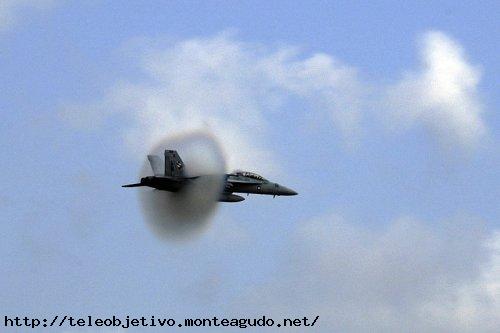
Sound travels at 340 m / s, equivalent to 1224 km / h. Exceed the speed of sound is going faster. When this happens it breaks the train of sound waves emitted by the plane and you hear the thunder, now the waves emitted by the plane behind the plane are not around ... Normally, flight speeds are classified according to their number Mach: Subsonic
less than 0.7 (less than 856 km / h)
transonic between 0.7 and 1.2 (between 856 and 1468 km / h) between 1.2 and Supersonic
5 (between 1468 and 6120 km / h) Hypersonic
greater than 5
The mass of the Earth creates a gravitational well: that a body can escape the gravitational force has to reach a top speed at 11.2 km / s. This speed is called escape velocity. If the ship is manned, its acceleration should not differ greatly from the value of 1 g (9.8 m / s ²), it is the acceleration to which the human body is used. While there have been reports of people able to withstand accelerations up to 15 g, when the body is subjected to prolonged periods of free fall cause nausea, muscle weakness, reduced sense of taste, poor absorption of calcium, and other symptoms . What happens to the astronauts? must be trained to changes in acceleration to suit your body and its functioning.



0 comments:
Post a Comment